The Confidence Code Summary: 5 Steps to Build Unshakeable Self-Confidence
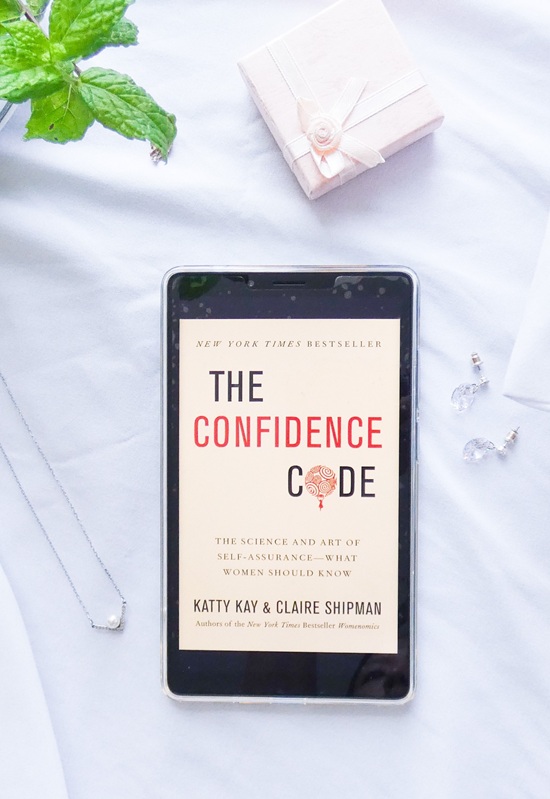
If you've ever held yourself back from going after something you really wanted — a job, a conversation, a dream — and told yourself "I'm just not confident enough," this book was written for you. The Confidence Code by Katty Kay and Claire Shipman is one of those reads that feels like a long overdue conversation with a wise, honest friend.
It's rooted in real science — psychology experiments, neuroscience, and interviews with some of the world's most accomplished women — and it makes a compelling case that confidence isn't a personality trait you're born with or without. It's a skill. And you can build it. Here's what stuck with me most.
Confidence is not some fixed gene we either have or don't. It is a choice — a practiced habit of mind.
— Katty Kay & Claire Shipman, The Confidence Code
Prefer to watch? I break it all down for you here ✨
What is The Confidence Code about?
The Confidence Code was written by journalists and authors Katty Kay and Claire Shipman with one clear intention: to empower women to stop waiting to feel ready, and start building genuine, lasting self-confidence. The book is a compelling blend of real psychology experiments, neuroscience, and candid interviews with high-achieving women who openly share their own confidence struggles.
What makes it stand out is that it doesn't just tell you to "believe in yourself." It explains why confidence gaps exist, what's happening in your brain and body when you feel less than capable, and exactly what you can do about it.
Is confidence genetic?
Yes and no — and this nuance is one of the most fascinating parts of the book.
According to Kay and Shipman, your genes do indirectly affect your confidence. Your DNA stores information about situations in which to release stress hormones, shaped by your own past experiences and even those of your ancestors. For example, if your ancestors were bitten by a spider, your body may be wired to release stress hormones around spiders — making you feel less calm, and therefore less confident, in those situations.
But here's where it gets hopeful: you are not locked into those patterns. Through repetition and by confronting your fears, you can turn off the expression of those genes — a process known as epigenetics. Your genes influence your hormones, which influence your stress response, which shapes your actions and behaviors. But you have far more agency over that chain than you might think.
Mindset shifts for living The Confidence Code
Confidence is a trainable muscle
Even if your default wiring leans anxious or risk-averse, that's not the whole story. Every time you push through discomfort, confront a fear, or act in spite of doubt, you're strengthening your confidence muscle. Over time, those old stress-response patterns quiet down — and a new, calmer, more capable version of you steps forward.
Take action before you feel ready
This is the one that hit me hardest. Overthinking and perfectionism are confidence killers — not because they make you worse at things, but because they stop you from acting at all. And without action, you have no evidence of your own capability. The cycle feeds itself. The antidote isn't to think more carefully. It's to act sooner, even imperfectly.
Waiting until you feel ready is just a prettier way of staying stuck.
Get comfortable failing by doing
Fear of failure is one of the biggest roots of low confidence. But here's the reframe: failure isn't proof you're not capable. It's proof you're trying. It's data. It's how you learn. The most confident people aren't the ones who never fail — they're the ones who don't take failure personally. They treat it as part of the process and keep going.
Fake it until you make it
At the beginning, acting confidently will feel uncomfortable — maybe even dishonest. That's normal. Imposter syndrome is part of the journey, not a sign that you're in the wrong place. Keep showing up anyway. Keep taking those small, brave actions. The feeling of confidence catches up with the behavior. It always does.
Everyone has insecurities
Confidence is domain-specific, which means even the most confident person you know has areas where they feel small and uncertain. Some of the most acclaimed women in the world share their confidence struggles in this book — and reading those interviews is genuinely moving. You are not alone. Be gentler with yourself and keep building.
How to live The Confidence Code in 5 steps
-
Get clear on your why
Before anything else, visualize yourself feeling genuinely confident — and get crystal clear on why you want it. Building confidence means getting out of your comfort zone, facing fears, and welcoming failure. That's uncomfortable. Your "why" is what will keep you going when the process feels hard. A vision board can help you stay anchored to what you're working toward.
-
Create a failures list and dare yourself to fail
Write down the things you're most afraid to try — the conversations you avoid, the risks you talk yourself out of. Then actively look for ways to incorporate those into your life, one small step at a time. Failing on purpose, in a safe and intentional way, teaches your nervous system that failure isn't fatal. That's how real confidence is built.
-
Try these 3 power poses
Your body posture sends signals to your brain. Research by Amy Cuddy shows that adopting expansive, open postures — like standing tall with hands on hips — can actually lower cortisol (the stress hormone) and make you feel calmer and more capable. Download the free PDF below for the specific power poses to try before high-stakes moments.
-
Build a meditation practice
Meditation doesn't have to mean sitting in silence for an hour. It just means giving your mind a break from the noise and coming back to yourself. It can be a breathing exercise, a body scan, or even making art. When you feel calmer on the inside, you naturally project more confidence on the outside. Find what works for you and make it a ritual.
-
Consider cognitive behavioral therapy
If your confidence blocks feel deeply rooted, working with a licensed therapist who practices CBT can be genuinely transformative. The goal is to identify the thought patterns that undermine you and replace them with new ones — then reinforce those new patterns through consistent action. It's essentially rewiring your brain for confidence.
Why confidence is essential for manifestation
1. Confidence is what gets you to take inspired action
You cannot manifest a dream you're too afraid to move toward. Confidence is the ignition. It's what allows you to trust your instincts, pursue opportunities, and step into spaces you've never been before. Without it, your dreams stay dreams. With it, they become a plan — and then a life.
2. Confidence builds your faith muscle
Manifestation asks a lot of you. It asks you to believe in something before you can see it, to stay patient while things unfold, to keep going when results aren't immediate. Confidence — in yourself and in the process — is what keeps that faith alive. It's the inner knowing that says: this is possible, and I am capable of receiving it.
3. Confidence is magnetic
Confident people attract better circumstances, better opportunities, and better people — not because they're perfect, but because they know their worth. They say no to what doesn't align. They hold out for what does. In manifestation terms, that energetic clarity is incredibly powerful. When you believe you deserve your dream, you stop settling for less of it.
Your vibe attracts your tribe. And confidence is one of the highest vibes there is.
The Confidence Code PDF Summary & Workbook
Ready to start building your confidence? This free PDF includes the book's key insights, power poses, meditation techniques, and worksheets to help you take your first brave steps — starting today.
My honest review of The Confidence Code
I felt genuinely motivated and lit up after finishing this book. It inspired me to stop overthinking, stop waiting for the "right moment," and start seeing failure as a prerequisite rather than something to be avoided at all costs.
What I love most is that it's grounded in real science and real stories. Kay and Shipman interview actual researchers and famously successful women who are honest about their own struggles with confidence — and that honesty is both refreshing and deeply reassuring. We so often see the polished highlight reel and forget that most extraordinary things began with a lot of messy, uncertain attempts.
I'd especially recommend this book to any woman who wrestles with perfectionism, overthinking, or imposter syndrome — particularly if she's standing at the edge of something big and hasn't quite found the courage to jump yet. This book is the nudge.